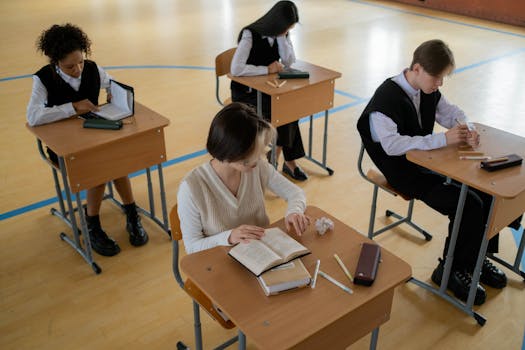





Did you know that in many countries, the number of students identified with disabilities has been on the rise? It’s not necessarily that more kids are developing disabilities, but rather our understanding and identification methods have become more sophisticated. This is where the fascinating world of special education in contemporary society really comes into play. It’s a field that’s constantly evolving, driven by research, societal shifts, and a growing awareness of the unique strengths each child brings to the table. Gone are the days of simply segregating students; today, it’s about integration, empowerment, and ensuring every single learner has the opportunity to thrive.
The Shift Towards Inclusive Classrooms
Perhaps the biggest, and most celebrated, evolution in special education is the widespread adoption of inclusive practices. For a long time, students with special needs were often educated in separate settings. While this sometimes provided specialized support, it also risked isolation and missed opportunities for social development and peer learning.
Now, the prevailing philosophy is that all students benefit when they learn together, as much as possible. This means creating classrooms where students with diverse learning needs can learn alongside their typically developing peers. It’s not about lowering standards; it’s about adapting them and providing the necessary scaffolding.
What does inclusion look like? It’s not just about placing a student in a general education classroom. It involves collaboration between general and special education teachers, differentiated instruction (teaching the same material in different ways), and utilizing assistive technologies.
The power of peer interaction: When students with and without disabilities learn together, it fosters empathy, understanding, and reduces stigma. It prepares all students for a diverse world.
Navigating the Nuances of Individualized Learning
At the core of effective special education is the concept of individualization. Every student is unique, and this is especially true for those who require specialized support. The Individualized Education Program (IEP) is the cornerstone of this approach. It’s a legally binding document that outlines a student’s specific learning goals, the services they will receive, and how their progress will be measured.
Crafting an effective IEP is a collaborative effort, involving parents, teachers, administrators, and often, the student themselves. It requires a deep understanding of the student’s strengths, challenges, and their preferred learning styles.
Beyond academic goals: While academic progress is crucial, IEPs also address social-emotional development, communication skills, and life skills.
The role of assessment: Ongoing, authentic assessment is key. It’s not just about standardized tests; it’s about observing students in different settings and understanding their learning process.
The Crucial Role of Early Intervention
One of the most impactful areas within special education in contemporary society is early intervention. The earlier a learning difference or developmental delay is identified, the sooner support can be provided, leading to significantly better long-term outcomes for the child.
Think about it: a child’s brain is incredibly adaptable in the early years. Providing targeted support during this critical period can help build foundational skills and prevent more significant challenges down the line. This often involves specialized programs for infants and toddlers with developmental delays, working closely with families to provide them with the tools and strategies they need to support their child.
Identifying red flags: Parents and educators are becoming more attuned to early indicators of potential learning differences.
The ripple effect: Successful early intervention can reduce the need for more intensive services later on and empower children to enter school ready to learn.
Technology: A Game-Changer for Special Education
It’s impossible to discuss special education in contemporary society without acknowledging the transformative power of technology. Assistive technology has opened up a world of possibilities for students with disabilities, breaking down barriers and enabling greater participation and independence.
From text-to-speech software that helps students with reading difficulties to adaptive keyboards for those with motor challenges, technology levels the playing field. It’s not just about providing accommodations; it’s about unlocking potential.
Personalized learning tools: Educational apps and software can offer tailored practice and immediate feedback.
Communication made easier: Augmentative and alternative communication (AAC) devices are revolutionizing how non-verbal students can express themselves.
Challenges and the Path Forward
Despite the incredible progress, challenges remain. Funding can be a constant concern, and ensuring adequate training and resources for educators is paramount. The landscape of special education is also shaped by varying legislation and societal attitudes, which can differ significantly from place to place.
Furthermore, the concept of “disability” itself is fluid. We’re moving away from a purely medical model towards a more social model, recognizing that societal barriers often contribute more to a person’s limitations than their inherent condition.
Teacher burnout: The demands on special education teachers can be immense. Adequate support and manageable caseloads are essential.
Parent advocacy: Parents are powerful allies in special education. Continued collaboration and open communication are vital.
* The evolving definition of “success”: We need to celebrate diverse forms of success, not just traditional academic achievements.
Wrapping Up: A Commitment to Every Learner
Ultimately, special education in contemporary society is about more than just a set of services or legal mandates. It’s a reflection of our commitment to equity, inclusion, and the belief that every child deserves the chance to reach their full potential. It’s a dynamic field, constantly learning and adapting.
As we continue to understand more about the brain and how people learn, special education will undoubtedly evolve further. The goal remains clear: to foster environments where all students feel valued, supported, and empowered to embark on their unique learning journeys. It’s a challenging but incredibly rewarding endeavor, shaping not just individual lives, but the very fabric of our communities.